Friday, 21 November 2014

Research into Mise-en-scene - Miss Georgiou


                                                          Research into Mis-en-Scene

Introduction

A typical thriller has scenes that are a build up of shock, surprise and tension and excitement as its main elements. A thriller provides the sudden rush of emotions, excitement, and exhilaration that drive the narrative sometimes subtly with peaks and lulls, sometimes at a constant, breakneck pace. It keeps the audience on the "edge of their seats". Mis- en - Scene is important within a thriller film because they are the 5 main things in thrillers that are needed to make a good film, that creates shock, surprise and suspense for the audience. 

 Mis-en-scene consists of 5 main elements:

1.  1. Setting and Iconography - Plays an important part in the film playing not just the background
2.  2. Costume, Hair and Make up - Act as an instant indicator to us of a characters personally it tells us whether the film is in the present. 
3.  3. Facial Expressions and Body Language - Provide an indicator of how someone is feeling, body language shows the relationship between one or more people. 
4.  4. Lighting and Colour - There are two types of lighting 1) Low key lighting - Created by using dark shadows, produces sharp contrasts of light and dark areas. 2) High Key lighting - More filler lights are used. Lighting is natural and realistic to our eyes. Produces brightly it lit sets. 
5.  5. Positioning of characters/objects within a frame - Characters within a frame can relate to how important the character is to the scene.


Chosen Film Scene: 'American Psycho' -  Chainsaw Scene

pastedGraphic.png


Setting and Iconography

The Chainsaw seen when Patrick runs out of the bedroom is Iconography (a prop) in the scene and this creates excitement and tension for the audience as this draws them in and makes them interested, this is as he chases her with the chainsaw. down the hallway and through the building. The prop, a chainsaw, is a typical convention of a thriller and this does in turn make the audience feel suspicious of the man with the chainsaw and his motives. The chainsaw is conventional of a thriller because it is a weapon and weapons are typically seen in thriller films as the item that is used to murder the victim(s). If there was no props within a thriller film then there would be no destruction or tense moments for the audience to be 'on the edge of their seats' meaning that they would probably not want to watch the film.  The use of Patrick and the chainsaw is dramatic irony because the audience assumes that from the setting he has a weapon. The setting is in an apartment of his but as she runs she finds another room which has writing on the wall and the lights flicker, this room builds up suspense for the audience because they then want to know what is going to happen to her. The abandoned room in the apartment is a typical convention to a thriller also because the room is dark and abandoned. This is useful and good within a thriller because this draws the audiences attention to the plot and makes them want to find out why the room is abandoned and what the murderer is going to do next. 


Costume, Hair and Make Up 

The fact that she has little clothing on lets the audience know that she is vulnerable and that she is now probably going to be the one to die. The audience may also feel that she is vulnerable because she has just been manipulated into having sex with this man and then he try to kill her. They audience may feel sorry for her character at this point because she is vulnerable she seems like she is an easy target for him to kill.  Patrick doesn't have any clothes on at all which you would think would make him the most vulnerable but actually he is the one with the power mainly because he is the one with the weapon. The hair in the scene looks scruffy and muffled up which could indicate that the characters are in a rush or really not organised and prepared for this. Especially the woman because she did not expect to be running up the corridors and Patrick wasn't prepared to run after her, he may have assumed that he would kill her in the bed too. This leads to the sense of urgency for the audience and they feel like there is a real rush to keep up with the scene as well as the urgency indicating to the audience excitement and thrill. This lack of clothing leads to a convention of a thriller because the woman is the victim that is being chased and the lack of clothing shows that she is vulnerable to the audience. Also this is conventional to a thriller because there is always someone in a thriller film that has been manipulated into doing something and then there being consequences for the character.  

Facial Expressions and Body Language 

 The facial expressions in scenes show how the characters are feeling this in turn helps the audience decide how they should feel about the particular scene and whats happening. In this case the woman has an expression of panic and her body language is telling that she is afraid and wants to run away. Patrick in the scene excited and happy even though he is killing someone the fact that he is chasing her gives him some kind of rush. The audience may feel for the woman because she is the victim and she looks really innocent, so they can feel sorry for her and not actually want her to die. The idea that the female is running away from Patrick shows a typical convention of a thriller because she is the vulnerable woman and there is normally the woman as the victim. Another convention of a thriller with the body language shows that there is always someone who is scared or in panic in a thriller film either because they are being chased or because they are they are plotting ways to murder someone.  

Lighting and Colour 
 
The lighting in this scene is dark at the beginning of the scene which is Low key lighting because there is only the natural lighting from the window into the room. This makes the audience feel tense, when the main character kills one of the girls in the bed the other girl moves and runs through the apartment building which is dark, this creates tension to the audience as she is running in the dark will she get away. As she runs down the stairs the lighting is flickering slightly building up the suspension for the audience as she is panicking. This is a typical convention of a thriller because there tends to be dark rooms or a murder tends to happen in the dark because then they can hide the evidence better. However this is conventional also because the lighting creates tension and panic for the audience as they realise that because it is dark something bad may happen. The audience will feel tense for the characters and the darkness can make the shock within a scene more real for the audience, this in turn keeps there attention in whats going on within the scene.


Positioning of Characters and Objects

The positioning of the characters in the part of the scene where Patrick is at the top of the stairs and she is running down the star is shows that the two characters are distant. This is mainly because Patrick is trying to kill her. In this case he is at the top of the stairs and she is at the bottom which is an indication that he is in charge as he is higher up the building and she is lower down. Patrick in this case has the power over the scene while the woman is vulnerable. When he drops the chainsaw down the stairs and she dies the characters are still distant because he does not go down the stairs he walks away. This has created tension for the audience because they don't know who or what he is going to kill next and makes the audience want to continue watching. This links to the typical conventions of a thriller because the protagonist is chasing the victim who is in fact a female which there tends to be in most thriller films leaving the audience feeling sorry for the character and leave them wanting them to not be hurt or murdered. 

Conclusion


In Conclusion the research that I have conducted on Mis - en - Scene will help me when planning my own thriller because I will know to include the 5 most important things of a thriller film.  Including Costume, Iconography, character positioning with each other and facial expressions and know how to include the most effective light. Mis - en - scene is important to a thriller because the 5 main elements are important other wise the thriller would not be or have any tension or suspense. Sound is important through mis - en - scene because otherwise the film would not make sense and you would not understand necessarily whats going on. As is Iconography and setting is important to  a thriller because otherwise if there was no props then the weapons would not be able to be used and would make the film very boring as there would just be violence through physical. For example if there was no knives used in a film to kill someone then the tension goes and it would take a lot longer to kill someone. The setting is important otherwise there would be no interest for the audience because you wouldn't be interested really in a film where there is a murder in a sunny day park, there would be no tension or suspense created. As is facial expressions and body language which is very important because otherwise the audience wouldn't know how the characters are feeling and what they are going to do next within the film.

The sorts of Mis-en-scene that I can include in my thriller is dark and light settings and scenarios as well as add in effective props and costumes to fit the scene. Other things that can be included from mis - en - scene for my thriller sequence is iconography as this creates suspicion, surprise and tension for the audience, Also there is the light and darkness like adding in to the scene things like shadows because this also makes the audience tense and feel for the characters.  As well as these things in thriller being Mis - en - scene they are also effective and typical conventions of a thriller like props and darkness. 


Individual Storyboards - Miss Miller


Individual Storyboards


Introduction


Storyboards are an important factor in the production of any film.Using storyboards makes filming and capturing certain needed shots on set just that little bit easier. Storyboards generally include the camera angles that you plan used for each shot and how long those shots are going to last. The storyboards on the right that I have created included the camera angles of the scenes, the locations that we will use to film, the iconography we will include, the lighting, the actors, the sound, the editing and a brief description of the narrative. They are all essential aspects to include in a storyboard so that those involved with the filming of a film know exactly when and where they are needed.

Myself, Chloe and Miranda have all created individual storyboards which consist  of 20 various frames which we wish to include when filming our thriller opening sequence. However, as a group we will collectively use our three storyboards to produce a final group storyboard which we will use when it come to filming our thriller opening sequence.  We have created our own individual storyboards first because it has given us individually a chance to decide how we would like the film film to pan out. 


Frame 1

The first scene that I drew onto my storyboard, is the scene where both girls are in the car, driving down an empty road by a forest headed to a party. In some ways this gives the audience the impression that the girls are safely on their way to the party. The  location of this scene is an empty road near the forest, the shot should last roughly 5 seconds. The entire opening sequence that we will produce is supposed to roughly last 2-3 minutes. The first frame will include parallel sound of the car as it drives across the scree. This will reinforce that the focus of the shot is on the car. 

 Frame 6

Frame 6 is when the audience get their first real feel the presence of antagonist within the sequence although the antagonist in our thriller opening sequence isn't actually seen, his identity concealed throughout but the audience is given an insight into the perspective of antagonist which will enable the audience to be able to build a relationship with the character.  This would be considered conventional of the thriller genre because unknown identity themes are very common and can create mystery and enigma for the audience, making the audience question who the character is and what his intentions are. Also, the location of the frame is in the forest as are the majority of our frames. Therefore, lighting will be natural rather dim. The use of low key lighting and shadows add a sense of unknown to the sequence and add tension to the opening sequence. 

Frame 11

Frame 11 uses POV shot, from the antagonists perspective I decided on this because it creates a sense of excitement as it is the first glimpse of the antagonist the audience receive which in turn keeps the audience's eyes glued to the screen hoping that more will be revealed. Additionally i think it would be effective to add on screen sound of crunching leaves as the audience see the antagonists pace increase. This should produce tension as the audience wonder is Gemma is aware of his presence or is she is able to hear the loud rustling of leaves too. This is conventional of a thriller as it heightens the state of excitement and makes the audience feel apprehensive as it is presumed the antagonist's intentions may be somewhat sinister due to previous behaviour captured in the sequence such as him stalking the the two girls as if they were prey.  

Frame 20

Frame 20 is the final frame that I  have decided on. Frame 20 consists of the sequence finishing with a  fade out to black which will hopefully produce enigma which is very conventional of the thriller genre our opening sequence belongs to. The camera shot that I decided to use was a zoom out as it depicts the entire scene showing the antagonist walking away from the scene of the crime and reveals Gemma's body lying still on the forest floor, presumably dead to the audience. The intention of including this within the final frame is to leave the audience in shock and suspense demanding to know what happens next.  


Conclusion

In conclusion,  creating these storyboards will help us thoroughly to go through our idea and make sure we are all clear of what is going to happen so we don't have any confusions. Creating the storyboards has also made my group and I more aware about what camera angles and editing styles we are going to use during and after filming, this will benefit us as we will be able to make sure our camera angles work with what type of atmosphere we are trying to create and allow us to plan what we are going to do with our work to make it the most effective we can.

Planning Opening Credits - Miss Georgiou


Planning Credits

Introduction

As  opening credits are one of the first things we see when watching a film, it is essential to use a font that is fitting of our production as it may be used to set the tone of the whole text, and also influence the audience's initial response to our production. Additionally, opening credits will be used in an opening sequence to a thriller film as a key purpose is to inform the audience who the main cast is and how important they are to the film in order of appearance. The purpose of credits within a thriller opening sequence can also be to introduce the mood of the film. The credits are also there to give you a sense of the film because the fonts and colours that are used for opening credits may tell you that you are watching a thriller film. 


There are several thriller conventions that can be found in the opening sequence of the film Se7en. Firstly, there is low key lighting and shadows used within this opening sequence. As the scene starts there is low key lighting surrounding the book that he is looking through, this shows straight away the genre of this film to the audience of which is the thriller genre. There is also to do with the low key lighting a lot of dark shadows, the shadows are used in this opening sequence because it creates a scary and eery tone, to he rest of the sequence and helps to draw the audience in. By there being shadows, it creates mystery for the audience and creates questions an enigma to the audience as to why there is shadows, maybe there is more than one person, or antagonist that isn't known about.  Another convention used in this opening thriller sequence was iconography, there was a sense that weapons are relevant or will be relevant in this film because there is a number of potential weapons seen throughout the sequence such as a needle and knives. This is conventional to the thriller genre because there is always a weapon used to attract the audiences attention. The use of weapons helps the audience to build a relationship with the character in this case most likely to be the antagonist, we can build a relationship with them because weapons make the audience realise that he is probably going to kill someone in the rest of the film and so already the audience are feeling sorry for the victims even though we haven't met them yet. 

There was a varied use of colour used within the credits of the opening sequence to Se7ven not just the fonts and credits styles but within the back grounds to give the audience an overall view and sense of the film and helps them to understand what genre the film is. Colours for the font of the credits were white, and the colour white is conventional to a thriller film because it can represent death but also mystery. Within the opening credits there was only one character and only what he was doing was seen and so the colour white really helped within this to create the mystery to the audience as to who this charter is and what their motives are, this helps to draw the audiences attention and keep them hooked to the rest of the film from the enigma that the font in the opening credits has helped to displace. The font itself looks to the audience like it was written by someone and so that makes the audience why it was written by someone, generating enigma


Credits for our Opening Sequence


My group members and I, we separately created our own credits with the fonts, texts and colours that we think would be good and then we have looked at then we will look at them together in order to see who's is the best and if it will fit into our thriller opening sequence.

My Credits idea

My opening credits  are conventional because the font is creepy looking which also reflects the thriller genre and helps the audience to get an understanding of the type of film that we are trying to portray to them. The text colour that she has used was a good idea because it is the colour white and this reflects the thriller genre because there is mystery created to the audience and a large sense of enigma which is conventional to the thriller films and the thriller genre. To improve I think that I need to as another colour to make it more conventional and more interesting to the audience to help them get hooked. 

Some strengths of Chloe's design is that it has the bold letters in capitals of the title and so this is important because it is conventuals and reflects the thriller genre. Another strength is that it is the colour white the text which represents to the audience mystery and wonder and leaves a lot of questions open to the rest of the film. A weakness and something to improve on is the way that these credits of mine fade into the screen as they are boring and would be to the audience and doesn't reflect very much the thriller genre. 

Conclusion 

In conclusion we have decided as a group to work on my opening credits because they were the most conventional and we decided that they would fit well into our opening sequence and be conventional. We have considered what our opening credits will include and they include the directors name, which inevitably is the most important to a thriller opening sequence and also then there would be the main cast and characters in order of appearance in our opening sequence. We will then include other credits such as hair and make up as well as music and other key people who deserve credit within our thriller film opening sequence. The most important thing for us to work on as a group is the title credit because it is important for the audience to see this as they need to know what the film is called. The title most importantly needs to reflect the genre of the film to the audience so that it is made clear what they are looking and watching, in this case the thriller genre. 


Wednesday, 12 November 2014

Character Discussion - Miss Miller


Character Discussion

Introduction
 Carrying out a group discussion regarding the characters we will include in our thriller opening sequence was an important process that was essential my group and I took part in. During our group discussion we were able to decide on various personal traits of each character such as age, gender and a general background overview. For each or the characters we will include we  each put forward our own ideas on traits we wish each character to posses. 


Victim One
The first character to be killed in our thriller opening sequence is Gemma. She is the character seen driving the car before it breaks down. Gemma is a young blonde female in her late teens. She is portrayed to the audience as bubbly, outgoing and not so intelligent. The character traits that we gave to this character make her a convention of the thriller genre as it would be considered typical to use a young blonde female as they are stereotypically seen as stupid and vulnerable, a combination which ultimately leads to the character becoming a victim. Gemma is portrayed as bubbly and outgoing as it gives her a reason for getting herself into a dangerous situation as she doesn't appear afraid of possible threats either due to her lack of intelligence or outgoing personality. Therefore she ends up alone in a forest being followed and then killed by the antagonist whereas her friend who is portrayed as slightly more timid remains in the car, in an area which is more so less dangerous due to the dull but still apparent street lighting.


Victim Two
Holly is Gemma's friend who has accompanied her to go to a party. Holly is also a female in her late teens. She is brunette and dressed in smart/casual party clothing to highlight the girls are on their way to a party. Holly  is Gemma’s best friend and the passenger in the car that breaks down. She also is a young female who is in her teens. She is a conventional character of the thriller genre because she also will be portrayed as  a vulnerable female victim that tends to be typically found within thriller films.  Even though Holly is not murdered in the opening sequence, she is remains one of the main victims because she, in addition to Gemma, is being stalked by the antagonist. Furthermore, the character will be seen wearing smart/casual party clothing to make it clear to the audience what the girls are up to driving around late at night which again depicts her as vulnerable. Her gender would be conventional of the thriller genre, taking into consideration she's a victim, however unlike Gemma, Holly doesn't go off into the forest foolishly on her own. She's presented to the audience as an intelligent to contrast Gemma's character. Gemma is stereotypically presented as blonde, fun, and slightly unintelligent whereas Holly is portrayed as the smart brunette, which is why she waits in car for Gemma to return.

Antagonist: Unknown Identity
As a group, myself, Chloe and Miranda thought it would be a good idea to incorporate the theme of hidden identity within our thriller opening sequence. Therefore the identity of the antagonist is not revealed during the entire sequence.  The audience will be unaware of who the antagonist is throughout the opening sequence and will not know what his  intentions or motives are but they will be able to establish a relationship with the antagonist as they will view parts of the sequence through his perspective using P.O.V. shots.  The gender of the antagonist is male which is usually very typical of the thriller genre. The audience will not be aware that the antagonist  is a male which will generate enigma as the audience find themselves asking yet another question which is the gender. However, towards the end of the opening sequence the audience will see the back of the antagonist as he walks away from the scene of the crime. He will be wearing a black hoodie and dark clothing. We chose black clothing as it would be considered conventional to the thriller genre because black connotes death and darkness. Furthermore, hiding the antagonists identity from the audience and from the characters would be  typical of the thriller genre as this creates the conventional thriller audience response of suspense for the audience.

Conclusion
In conclusion, the characters that the group and myself  have decided to include in our opening thriller sequence are conventional to the thriller genre because the antagonist has a conventional hidden identity and there are two young female victims who are blatantly portrayed as vulnerable prior to the first attack which therefore causes the genre of our opening sequence to become obvious to the audience. Using time to plan the characters we will include in our thriller opening sequence has helped us, as a group to generate imagery regarding what the characters are going to be like and how we are going to present them on screen when we come to filming.


Tuesday, 11 November 2014

Planning Cinematography - Miss Miller


Planning Cinematography

Introduction

Myself, Chloe and Miranda have decided on  the camera shots and angles that we will use within our opening sequence of our thriller film. Cinematography is really important within a film, as it can affect the way an audience feels about a film scene and if there was not a variety of different shots then the film would dull and uninteresting and it would not attract an audience for the film or the sequence. Planning these shots and angles are important in order to create a good opening sequence because if they are planned then you know exactly what shots you want to use and what effect they will have on the audience. In our group we have chosen a variety of different camera angles and shots knowing how we would want the audience to 
react to the opening sequence. Sometimes the techniques of cinematography can be very obvious e.g. cinematography often seen in Tarantino films have led to his movies being known for being notably distinct in a visual sense. However, some films use very subtle and natural looking effects, so much so, that the audience does not notice the manipulation.
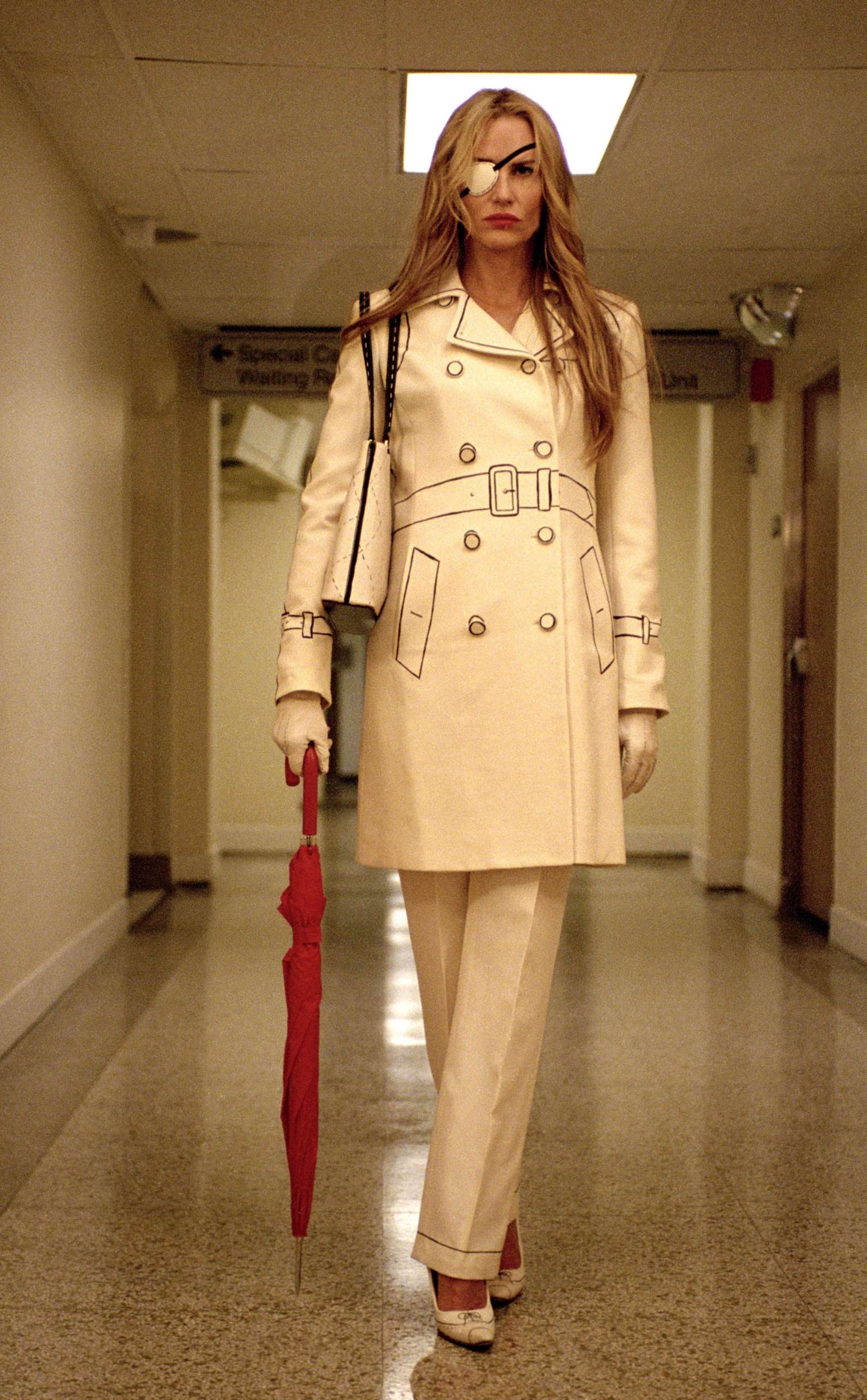
Quentin Tarantino has trademarked the trunk shot camera angle and has used it in every movie he has directed. He also uses reverse trunk shots with characters being watched from outside the trunk. 
e.g. Kill Bill : Volume 1

Mid Shot 
One of several camera shots  that my group and I have decided to include in our opening sequence is a mid shot. A mid The mid shot shows some part of the person in more detail, while still showing enough for the audience to feel as if they were looking at the whole person. This is an generally  how you would see a person in real life if you were having a casual conversation. You wouldn't pay attention the lower part of their body, so that part of the picture is unnecessary. We will use this camera shot in our sequence when the two girls Gemma and Holly (the two main victims) are in the car. Hopefully this will enable the audience get a feel for who the characters are and warm to them before realising that something bad is likely to happen. Therefore, this will make the audience question what it is that is going to happen next to Gemma and Holly and makes the audience apprehensive. The audience will be able to build a relationship with these characters because they can see clearly from a mid shot the two characters in the car and it will feel almost if the characters are involved within the two girls conversation. Due to the two girls being on there way to a party, a situation considered by most as an ordinary situation, the audience are fooled into assuming that everything is fine, therefore it is shocking and surprising when things start to take a turn for a worst, leaving the audience horrified. This would be considered a convention of a thriller as the audience are introduced to the victims in a positive way and are able to establish a relationship characters and once they are brutally killed the audience are left in shock which is conventional to the thriller genre as producing shock keeps the audience sitting on the edge of their seat anticipating what happens next. 


Point of View

We also decided that we are going to use a Point of View shot. This shot is used to show the audience the same image as the character and makes the audience wonder why we are seeing what he is seeing and not him. With a Point of View shot the audience feel like they are the character as they are seeing what they are seeing and makes them tense about what is going to happen. This will be used as the antagonist is watching the girls from behind there car and whenever it is the antagonists perspective, also when her follows one of the victims into the forest and kills her, again the camera will still be front the antagonists Point of View. The antagonist is never revealed throughout the opening sequence he is always hidden behind the camera. This is conventional of a thriller film because the identity of the antagonist is hidden and makes the audience question who he/it is and what they want to do and what there motives are. For the audience it generates enigma and makes the audience wonder what his motives are. The fact that the identity of the antagonist is hidden makes this conventional to a thriller because it creates tension for the audience and makes them feel nervous for the characters as the hidden identity makes the audience wonder what the antagonist has to do with the girls and why he wants to harm them. 

Panning

Also, myself, Chloe and Miranda decided that we will use panning in our opening sequence when the car breaks down the camera will pan and follow the car along the road. Panning is when the camera left and right from a central axis to follow a specific object or person. The effect of this technique is to bring out all the aspects within the frame however we will be focusing on the car. We decided to include panning to create a tension and a state of panic for the audience as they question might happen next. This is a convention of the thriller genre as the panning of the camera creates tension for the audience and allows the audience to build a relationship with the characters and gather an insight on their actions. Once the car comes to a stop the audience will begin to wonder why this has happened and whats going to happen next for both Gemma and Holly. 


Long shot

Long shot is another shot that our group deiced we wanted to use in our thriller opening sequence. In the long shot, the subject takes up the full frame. The subject's feet should be almost at the bottom of frame and their head, almost at the top. Long shot's show all of a large object for example the subject and a fair bit of background. We will use a long shot in our thriller opening sequence when the antagonist walks away from the the scene of the crime where he has killed Gemma and the camera will catch  a long shot of him walk away, therefore the audience will see a full shot  of the antagonist from behind but they will not see him from the front as we are including a hidden identity theme which is conventional to the thriller genre because the hiding the antagonists identity generates lots of mystery and enigma which is typical of a thriller. This lack of a relationship the the audience has with the character leaves them wanting to know all about the character, why he is hiding his identity and his reason for committing the horrific acts. 

Hand Held 

Due to deciding that most of our camera shots in our opening sequence would be from the antagonists point of view our group has decided that we will be using mainly hand held camera shooting because this is the best way to film p.o.v shots. This is conventional of the thriller genre as often in thriller films you see events unravel from either the antagonists or other characters point of view and so the use of handheld gives the audience an insight into the characters perspective. Through the use of the handheld cameras the audience are audience are enabled to develop a relationship with the characters.

Conclusion

In conclusion myself, Chloe and Miranda have decided to use these camera angles and shots within our thriller opening sequence due to their effect on the audience, how they effectively portray the characters and fit conventions of the thriller genre. This research and preparation which my group and I have carried out has helped me and my group with the focusing in on what shots and camera positions we are going to use when filming. This planning has been a productive use of time for our group as we have discovered during our preliminary task that making use of the right camera angles for the particular moments is more challenging than first perceived. Due to planning we now have a checklist of shots that we are definitely going to use, meaning that we can prepare for filming and produce audience responses we are aiming for; shock, horror, enigma, suspension and tension. 


Monday, 10 November 2014

Planning Sound - Miss Miller


Planning Sound

Introduction

 Film is generally thought of as an essentially visual experience, however, the importance of sound within films is underestimated. An effective sound track is often as complex as the image on the screen. The entire sound track within films is comprised of three essential things. They are the human voice, sound effects and music. All aspects of sound used within film are used to manipulate the emotions of the audience. As we are producing an opening sequence for a thriller, my group and I are using specific sound techniques to produce specific effects such as the conventional audience responses of the thriller genre which include; shock, fear, apprehension, enigma and tension.  Therefore in order to produce an excellent opening sequence of a thriller, the planning of sound is an essential process for my group and I to take part in.

Sound Techniques

Non-Diegetic Sound -
My group and I have chosen to include non-diegetic fast paced eerie music in our thriller opening sequence towards the end as the antagonist's back is turned from the camera and he is seen by the audience calmly walking away from the scene of the murder. The effect of the fast paced music will cause the audience to feel tension and become in a heightened state of shock. Also, the use of the fast pace of the music will cause the audience to feel as if they have to keep up wight the quickly developing storyline. 

Diegetic Sound - 
Myself, Chloe and Miranda have decided that we will include the diegetic sound of upbeat music playing on the car radio in addition to having the two female characters singing along just prior to the car breaking down on an empty isolated road late at night. The effect of including this diegetic sound of upbeat music and singing is that it will  trick the audience into thinking that everything is okay so when the car does eventually break down the audience are surprised and feel sorry for the characters as they see they're enjoyable friday night quickly come to an end. In addition, the audience are also given an insight into both of the girls night quickly spiralling out of control.  Due to the use of this diegetic sound they are then portrayed as vulnerable and therefore the audience produce sympathy for them and when something bad and unexpected suddenly takes place they feel sorry for them and what has happened. This would be conventional of the thriller genre because as diegetic sound is typically found in thriller films and using the diegetic sound of the radio playing makes the audience feel more tense and shocked at whats happening, when it does suddenly occur.


Parallel Sound - 
We have planned to use the parallel sound of the antagonist walking through the forest stalking the girls prior to the murder as it is sound that the audience will expect to hear in the scene (which is what parallel sound is). This use of sound also informs the audience that the antagonist is hiding and stalking the girls like a hunter the audience will see the antagonists feet walking and then expect the noise of crunching leaves which leaves the audience feeling tense and apprehensive about the events that are yet to take place within the thriller opening sequence. During the camera shot of the antagonists feet as he is walking, following the girls, will be where the audience can only see and hear the antagonist's feet as it is from the antagonists point of view. This would fit conventions of the thriller genre as this would cause the audience to feel nervous for outcome of the two victims. When the audience hear the sound of the leaves crunching in addition with the dark surroundings they will begin to feel more and more anxious for the two girls which will help the audience to establish a relationship with the characters as they feel sorry for them as they know the girls are being stalked even though the girls don't. The effect that the use of parallel sound has is that it produces a vast amount of tension for the audience as they question his whereabouts in the forest and his purpose for being there. It makes the audience question whether the characters will encounter each other and if the antagonist is a danger to the girls.

On Screen Sound -
We also decided to include on screen sound in our thriller opening sequence. On screen sound is heard when the audience can see where exactly the sound is coming from in the scene. On screen sound will be used in our thriller opening sequence when the car engine starts to make noises when the car breaks down and the audience can see the car come to a halt, as the engine makes strange noises when the car comes to a unexpected stop. This would be considered typical of the thriller genre and would fit conventions as the sound being heard and seen by the audience of the car breaking down suggests that the girls are going to find themselves in a predicament. The effect of this is that the audience are made to feel nervous and tense. Furthermore this then causes the audience to question why this has happened and how the girls are going to find their way out of their sticky situation. This enables the audience to initiate a relationship with the characters because the noise of the car breaking down prior to a silence highlights that something bad is likely to happen to Gemma and Holly which causes the audience to feel apprehensive.

Conclusion

In conclusion, planning the sound which we wish to use in our thriller opening sequence  is important as it has allowed to discuss and analyse how the use of various sounds will be  effective. We have to decided to include the above sounds as we believe it is important important that they are included in our thriller film as it indicates the direction of the storyline and makes the thriller openings sequence more intriguing for the audience to watch and holds their attention. We have chosen to use the sounds The sounds above as we believe they will be effective in regards to fitting conventions of the thriller genre as they will produce typical thriller audience responses such as tension and shock. The planning of sound is essential as it  will enable us to have a plan to use prior to our filming and give us a rough idea of a timeline of what to include and when.